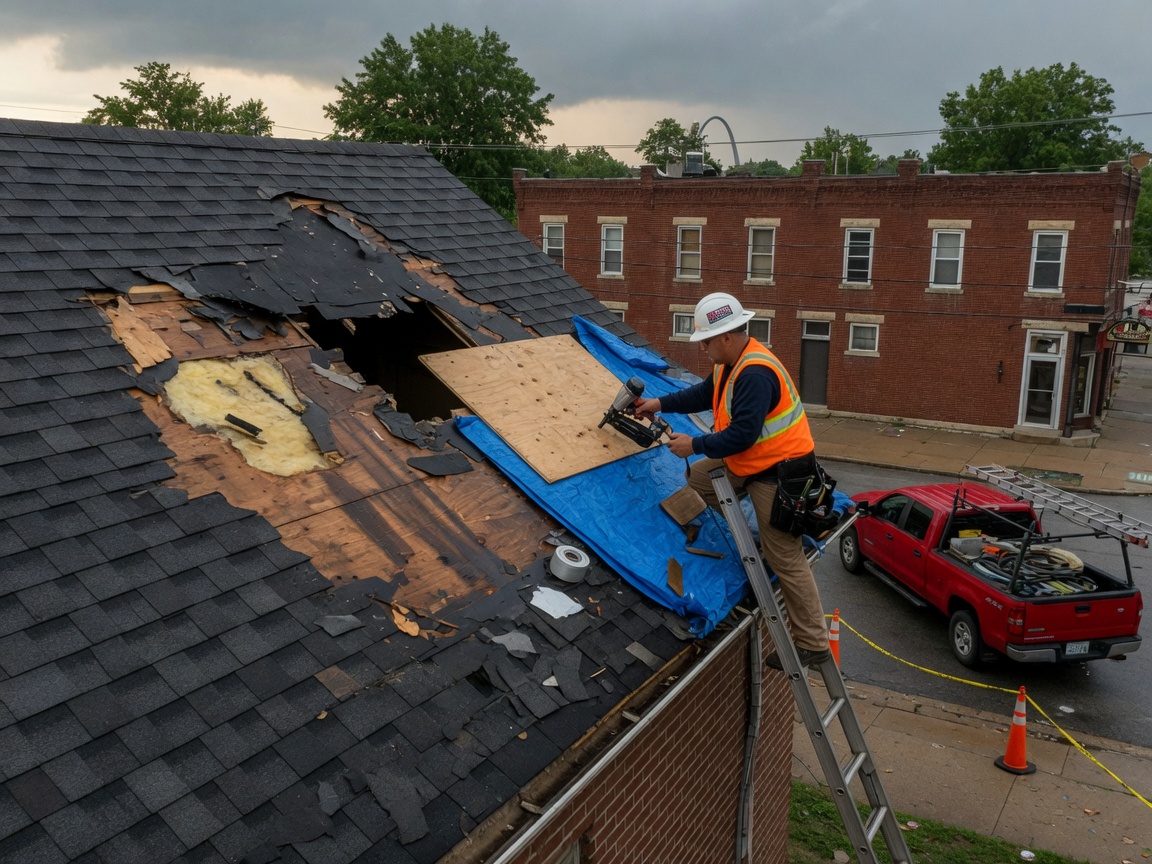
St. Louis sits in a humid continental climate where severe thunderstorms roll through in spring and summer while winter brings ice dams along the eaves of older homes. In neighborhoods like Soulard and Benton Park, many two-story brick buildings from the late 1800s have slate or three-tab asphalt roofs that crack when freeze-thaw cycles repeat. A single missing shingle or failed step flashing can send water into plaster ceilings within hours once heavy rain hits.
Emergency calls often come after straight-line winds tear sections off near the Gateway Arch corridor or after hail in Tower Grove South. Crews start by tarping from the ridge down to the gutter line using furring strips so wind does not lift the cover before permanent work begins. In Central West End and Midtown, tight alleys and shared walls mean ladders must be staged from the street, adding time and requiring spotters to watch for traffic.
Flashing around chimneys and skylights on University City and Webster Groves homes frequently fails first because original counter flashing was never stepped into the brick joints. Temporary sealant holds until the next freeze, so crews carry both butyl tape and lead wedges sized for the local brick profiles. Downspouts clogged with leaves from Forest Park trees back water under the roof deck on the north side of many Shaw and Forest Park Southeast houses.
Once the immediate leak is stopped, the crew documents every affected course of shingles and any rotted decking so the homeowner can schedule full replacement before the next storm season. Work stops only when the roof is watertight enough to pass a garden-hose test from the ridge.
Technician insight
In St. Louis the thing that catches most people out with emergency roof repair is how fast water travels under the old mortar joints on brick parapets in neighborhoods like Benton Park and Shaw once a single piece of counter flashing lifts during a thunderstorm.
Wind-Lifted Shingles on a Benton Park Two-Story
Heavy winds tore shingles near the rear parapet of a 1890s brick home. Water reached the second-floor ceiling within two hours. Crew tarped from the ridge to the gutter using furring strips, traced the path through the attic, and confirmed no further drips. Homeowner scheduled full replacement the following week.
Emergency Roof Repair Services We Offer
✓Storm Damage Tarping
Secure heavy-duty tarps over wind-lifted or hail-damaged sections to stop water entry until permanent repairs can be scheduled.
✓Active Leak Containment
Locate and seal active interior leaks in ceilings or walls using temporary membranes and diversion channels that protect plaster and wiring.
✓Ice Dam Removal and Prevention
Clear ice dams along eaves in winter and install heat cable or improve ventilation to prevent recurring water backup in older attics.
✓Wind-Damaged Shingle Replacement
Replace lifted or missing shingles and re-secure flashing on homes in exposed areas like Downtown and Carondelet after high-wind events.
✓Chimney and Skylight Flashing Repair
Re-step counter flashing and replace step flashing around chimneys and skylights common on Central West End and Lafayette Square brick homes.
✓Gutter and Downspout Emergency Fixes
Clear blockages and reattach separated gutters so water no longer backs up under the roof edge during heavy rain.
Emergency Roof Repair Cost in St. Louis, MO
| Service | Typical Range | What Affects It |
|---|---|---|
| Emergency Service Call and Assessment | $175–$350 | Covers travel in the Independent City and first hour on site; price rises with distance to Kirkwood or Clayton. |
| Tarping One to Two Squares | $400–$750 | Includes materials and labor; multi-story homes in Soulard or The Hill add staging time. |
| Ice Dam Removal | $300–$600 | Steam or manual removal on one elevation; severe cases on older Delmar Loop homes require follow-up ventilation work. |
| Flashing and Leak Stop on Chimney | $250–$500 | Temporary repair only; full re-flash quoted separately after inspection. |
Ranges are typical for St. Louis, MO and confirmed with an exact written quote before any work starts.
How it works
- 1
Call Intake and Dispatch
Owner takes the call, records the exact address and weather trigger, then sends the nearest crew with tarps sized for St. Louis roof pitches.
- 2
On-Site Safety and Assessment
Crew checks for soft decking from the attic, marks all water trails, and photographs every affected neighborhood landmark reference point.
- 3
Temporary Waterproofing
Install tarps or membranes secured to solid substrate, then test with water to confirm no further interior drips before leaving the property.
- 4
Documentation and Follow-Up Schedule
Provide a written scope with photos and set a date for permanent repair once weather allows full material delivery.
Pricing
Most emergency visits fall between a service call and a half-day labor rate; larger storm events that require multiple tarps or attic work move higher.