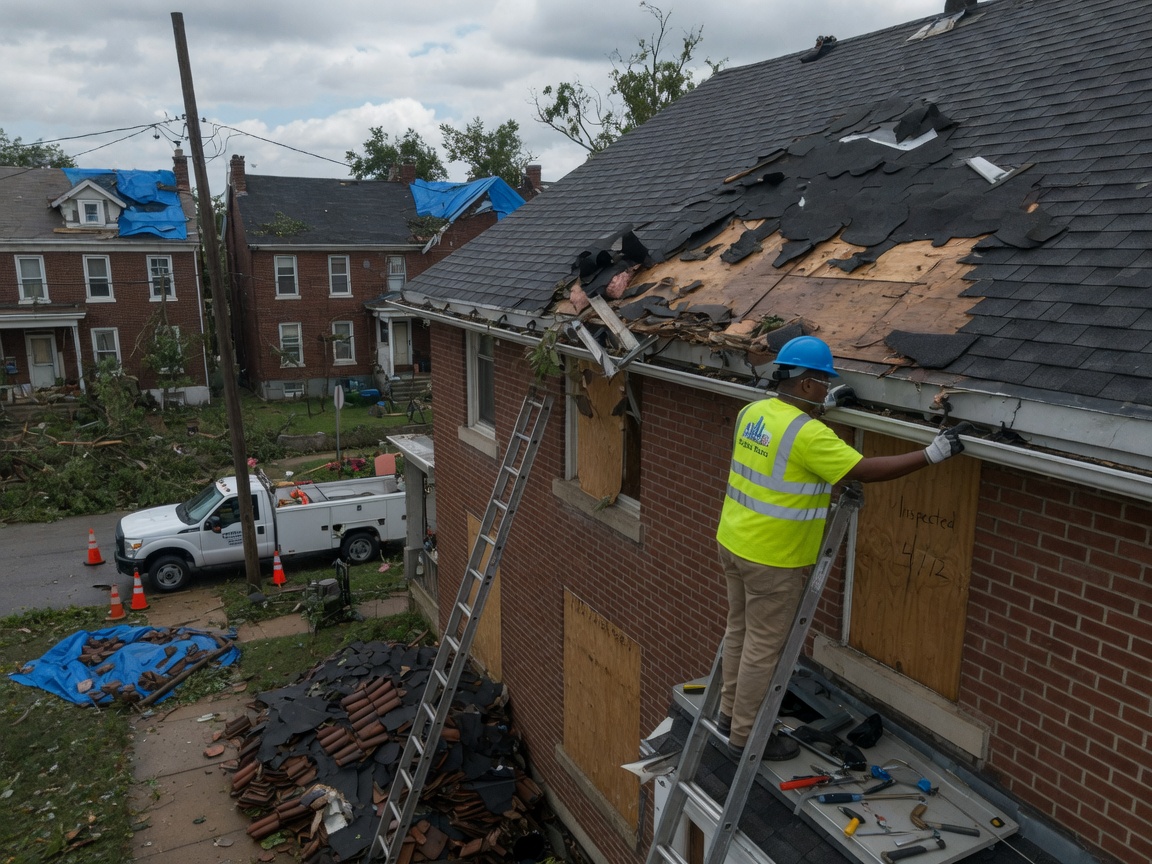
St. Louis sits in a humid continental climate that brings frequent severe thunderstorms from spring through fall, often packing high winds and hail that tear at asphalt shingles and older slate roofs found throughout Soulard, Lafayette Square and Benton Park. These storms can lift underlayment or drive water under flashing on homes built before modern code updates, especially in the Independent City where many structures date to the early 1900s. Crews working in these neighborhoods routinely check for hidden deck damage after wind events because the dense tree cover in Tower Grove South and Forest Park Southeast hides impact points until leaks appear months later.
Cold winters add freeze-thaw cycles that widen any storm-created openings, particularly on the steeper pitches common in Shaw and The Hill. When hail stones larger than a quarter hit, they fracture granules on three-tab shingles without always leaving obvious craters, so a proper repair starts with walking the roof in daylight rather than relying on ground-level photos. Nearby cities such as Clayton and Webster Groves see similar patterns, but the denser urban blocks in Midtown and Carondelet create access challenges that change how tarps and temporary patches are staged during an active storm cell.
Materials must match the existing roof to satisfy insurance adjusters and avoid patchwork that draws attention during resale. In older stock, crews often replace individual slate tiles or install ice-and-water shield along valleys and eaves to handle the next round of heavy rain that typically follows a derecho. Homeowners in Downtown and Delmar Loop frequently request documentation of pre-existing conditions because wind-driven rain can enter through attic vents that newer homes in Kirkwood rarely have.
Technician insight
In St. Louis, the thing that catches most people out with storm damage is how quickly hail from those summer thunderstorms can compromise older slate roofs in places like The Hill without obvious signs until leaks start in winter. Freeze-thaw cycles then push water under the remaining tiles and rot the deck before spring arrives.
Wind Damage on a Benton Park Two-Story
A June storm lifted shingles along the south slope of a 1920s home. Inspection showed torn underlayment and water staining in the attic near the chimney. We replaced the affected course, added ice-and-water shield at the valley, and matched the existing three-tab profile so the repair blended with the rest of the roof.
Storm Damage Repair Services We Offer
✓Hail Damage Assessment
Walk the roof to locate granule loss and fractures that insurance often misses on older St. Louis homes.
✓Wind Uplift Repair
Re-secure lifted shingles and replace damaged underlayment after straight-line winds common along the Mississippi corridor.
✓Emergency Tarping
Install temporary waterproof covers on compromised sections to protect interiors until full repairs can be scheduled.
✓Tree Impact Restoration
Remove debris, assess decking and restore roofing after limbs fall during summer thunderstorms in tree-lined blocks like Forest Park Southeast.
✓Flashing and Valley Leak Repair
Replace or reseal step flashing and valleys that storm water forces open on homes in Central West End and Soulard.
Storm Damage Repair Cost in St. Louis, MO
| Service | Typical Range | What Affects It |
|---|---|---|
| Emergency Tarping | $250–$600 | Size of affected area and roof pitch |
| Hail or Wind Section Repair | $800–$2,200 | Number of squares and whether slate or asphalt |
| Flashing and Valley Work | $400–$950 | Access difficulty in dense neighborhoods |
| Full Slope Replacement After Storm | $3,500–$7,500 | Deck condition and disposal needs |
Ranges are typical for St. Louis, MO and confirmed with an exact written quote before any work starts.
How it works
- 1
On-Site Evaluation
Inspect roof surface, attic and surrounding trees for storm-related damage while documenting conditions for insurance.
- 2
Scope and Material Match
Identify exact shingle or slate profiles used in the neighborhood and prepare a repair plan that blends with existing work.
- 3
Temporary Protection
Install tarps or covers where needed to stop active leaks before permanent work begins.
- 4
Targeted Replacement
Replace damaged sections, reinforce underlayment and reseal flashings using products suited to St. Louis freeze-thaw cycles.
- 5
Final Walk-Through
Review completed repairs with the homeowner and provide photos for insurance records.
Pricing
Upfront written estimates after inspection; cost depends on roof access, material type and extent of hidden deck damage.