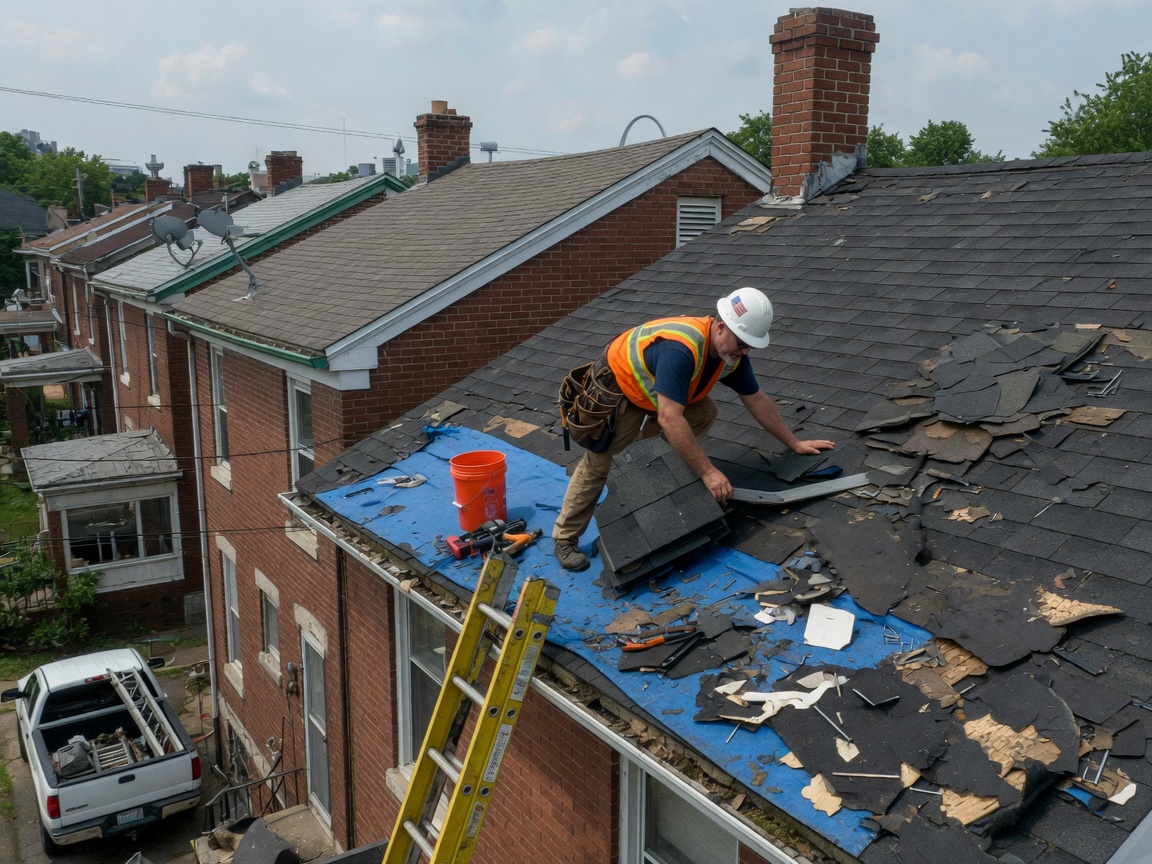
St. Louis roofs take repeated hits from the region's humid continental climate. Hot summers bake shingles while winter freeze-thaw cycles open seams around chimneys and valleys. Severe thunderstorms with high winds and hail are common, especially in spring and summer, so crews working in neighborhoods like Soulard or Lafayette Square often find torn underlayment and lifted flashing on 1920s brick homes that still dominate the housing stock. Matching original slate or three-tab shingles matters because many blocks fall under historic district rules that limit visible changes.
Water intrusion shows up differently here than in newer suburbs. In Central West End and Shaw, parapet walls and shared chimneys on row houses let rain run behind brick and into attics. Crews check for rot in decking that sits directly on older rafters without modern ventilation. Downtown and Midtown buildings sometimes have flat sections tied into pitched roofs, requiring separate membrane patches that must tie into existing metal counterflashing without disturbing neighboring properties.
Nearby cities such as Clayton, University City, and Webster Groves share the same storm patterns and soil conditions. Clay-heavy soil around Forest Park Southeast and Carondelet causes minor foundation movement that stresses roof planes over decades. Repair work therefore includes checking for ridge movement and adding supplemental fasteners where original nails have backed out. Materials must handle both extreme heat and sudden temperature drops without cracking.
Technician insight
In St. Louis the thing that catches most people out with roof repair is how freeze-thaw cycles loosen step flashing on 1920s brick chimneys in neighborhoods like Benton Park and Shaw. Homeowners often notice interior stains only after the next heavy rain because the original counterflashing was never properly tied into the brick. Checking both the roof plane and the attic during the same visit catches hidden deck rot before it spreads to neighboring rafters.
Wind damage on a Shaw row house
High winds from a spring storm lifted shingles along the valley on a 1925 brick home. Inspection showed torn underlayment and water tracking behind the shared chimney flashing. New flashing was installed and matching shingles replaced in the affected section, restoring the roof plane without disturbing the adjacent property.
Roof Repair Services We Offer
✓Storm Damage Repair
Replaces torn shingles, dented flashing, and compromised underlayment after hail or high-wind events common across the Independent City.
✓Leak Detection and Sealing
Locates active leaks around chimneys, valleys, and skylights in older homes in Benton Park and Shaw, then applies targeted sealants and new flashing.
✓Shingle Replacement
Matches and installs individual or section shingles on three-tab and architectural roofs found throughout Tower Grove South and The Hill.
✓Flashing Repair
Reseals step flashing and counterflashing on brick chimneys and parapets typical of Soulard and Lafayette Square row houses.
✓Emergency Tarping
Secures temporary reinforced tarps over wind-damaged sections in Delmar Loop and Downtown to prevent further water entry until permanent repairs.
Roof Repair Cost in St. Louis, MO
| Service | Typical Range | What Affects It |
|---|---|---|
| Minor shingle and flashing repair | $350–$850 | Single slope or section; price rises with steep pitch or difficult access in older neighborhoods. |
| Storm damage section repair | $900–$2,200 | Includes underlayment replacement; larger hail events often require more squares. |
| Chimney flashing reseal | $275–$550 | Brick chimney work common in Soulard and Central West End; masonry condition affects scope. |
| Emergency tarping | $225–$475 | Temporary measure; size of damaged area and roof height determine final cost. |
Ranges are typical for St. Louis, MO and confirmed with an exact written quote before any work starts.
How it works
- 1
On-Site Inspection
Walk the roof and attic to map damage, check decking condition, and note any historic or shared-wall constraints in the neighborhood.
- 2
Material Matching
Select shingles, underlayment, and flashing that align with existing roofing and any local guidelines for the block.
- 3
Targeted Repair
Remove damaged sections, install new materials, and tie into sound surrounding roof without disturbing adjacent properties.
- 4
Final Walk-Through
Review all repaired areas from both roof and interior, confirm drainage, and note any follow-up items for the homeowner.
Pricing
Upfront quotes after inspection; price varies by roof access, material match, and extent of hidden deck damage.