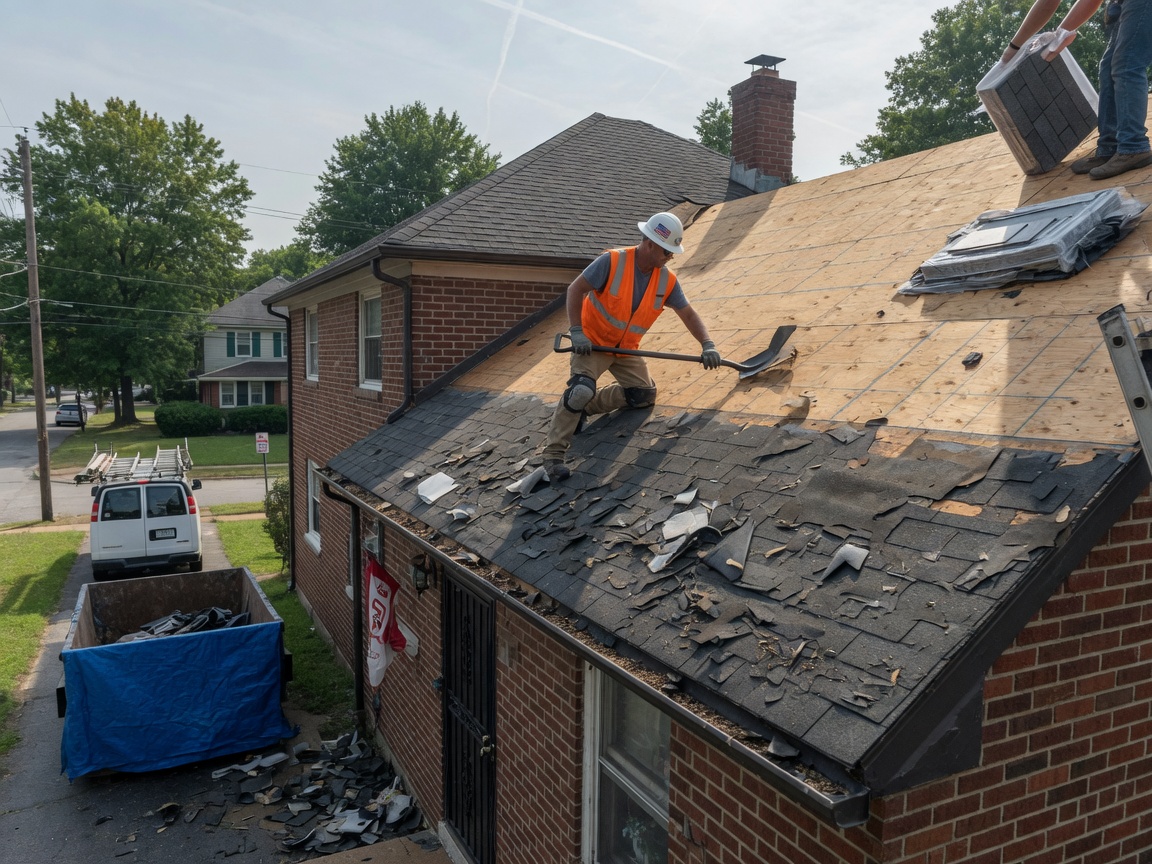
St. Louis Independent City neighborhoods such as Soulard and Lafayette Square hold many two- and three-story brick homes built between 1880 and 1920. These structures often carry slate, wood shake, or early asphalt layers that have endured repeated hail and high-wind events from the region’s humid continental climate. When replacing roofs here, crews must account for narrow alleys that limit equipment access, parapet walls that require custom step flashing, and the need to match existing cornice details to satisfy local historic district guidelines.
Hot summers followed by sub-freezing winters create daily expansion and contraction cycles that open seams in older underlayment. Frequent severe storms drop large hail that fractures brittle shingles on homes in Tower Grove South and Benton Park. Replacement crews therefore install ice-and-water shield along all eaves and valleys, upgrade to impact-rated shingles where wind exposure is high near Forest Park, and verify attic ventilation to reduce heat buildup that accelerates shingle aging.
Downtown and Midtown conversions from commercial to residential use often reveal flat or low-slope sections adjoining pitched roofs. These transitions need reinforced membrane flashing and proper cricket construction to prevent ponding against brick parapets. In nearby Clayton and University City, tree cover from mature oaks adds shade that promotes moss growth, so replacement includes zinc-strip installation along ridges to slow biological staining without chemical treatments.
Kirkwood and Webster Groves homes sit on slightly rolling terrain that can create uneven roof planes; leveling sleepers and sistering rafters become routine steps before new decking goes down. Every project begins with a full deck inspection because hidden water damage from past leaks is common in these older rafter systems.
Technician insight
In St. Louis the thing that catches most people out with roof replacement is hidden rafter rot along parapet walls in 1890s brick homes in Soulard and Lafayette Square. Freeze-thaw cycles open small leaks that travel behind the brick and rot the top plate before anyone notices from inside. We always open the deck at those walls first so the homeowner sees the actual condition before we quote the full job.
Soulard Two-Story Brick
Homeowner called after a spring hail storm left granules in the gutters. Inspection revealed three layers of shingles over rotted deck boards along the rear parapet. We removed all layers, replaced damaged rafters, installed new ice-and-water shield and architectural shingles, and added ridge vent. The roof now sheds water cleanly into the rebuilt gutters and matches the neighboring historic homes.
Roof Replacement Services We Offer
✓Asphalt Shingle Replacement
Full tear-off and installation of architectural shingles rated for St. Louis wind and hail exposure on single-family homes in Shaw and Forest Park Southeast.
✓Slate Roof Replacement
Careful removal and reinstallation or substitution with synthetic slate on historic homes in Soulard and Lafayette Square while preserving original appearance.
✓Metal Panel Roof Replacement
Standing-seam metal systems installed over older homes in The Hill and Carondelet to handle heavy snow loads and improve attic ventilation.
✓Low-Slope Membrane Replacement
TPO or EPDM membrane replacement on flat sections of mixed-use buildings in Downtown and Midtown where parapet flashing meets pitched roofs.
✓Storm Damage Roof Replacement
Complete replacement after hail or wind events common along the Delmar Loop and Tower Grove South corridors, including documentation for insurance adjusters.
✓Historic District Roof Replacement
Material and detail matching required for properties in Benton Park and Central West End to meet local review board expectations.
Roof Replacement Cost in St. Louis, MO
| Service | Typical Range | What Affects It |
|---|---|---|
| Asphalt Shingle Replacement | $6,500–$12,000 | Typical 1,800–2,400 sq ft home; price rises with steep pitch or multiple layers. |
| Slate or Synthetic Slate | $14,000–$22,000 | Historic homes in Soulard or Lafayette Square; includes custom flashing details. |
| Metal Panel System | $11,000–$18,000 | Low-slope transitions or high-wind exposure near open parks. |
| Low-Slope Membrane Section | $2,800–$5,500 | Flat additions or porches adjoining main roof; measured separately. |
| Deck Repair Allowance | $1,200–$3,000 | Common on older Central West End and Shaw homes with prior leaks. |
Ranges are typical for St. Louis, MO and confirmed with an exact written quote before any work starts.
How it works
- 1
Initial Inspection
Technician climbs the roof and attic in the specific neighborhood to measure decking, note flashing conditions, and identify hidden rot common in St. Louis brick homes.
- 2
Material Selection
Homeowner reviews impact-rated shingles or slate alternatives suited to local storm patterns and any historic district color requirements.
- 3
Tear-Off and Deck Repair
Old layers removed down to decking; damaged rafters sistered or replaced, especially on homes in Soulard and Lafayette Square where previous leaks are frequent.
- 4
Installation and Flashing
New underlayment, ice-and-water shield at eaves, step flashing at parapets, and final shingle or panel installation with ridge vent added for attic airflow.
- 5
Final Walk-Through
Crew and homeowner inspect every valley, penetration, and gutter tie-in from the ground and attic to confirm water-tight details before cleanup.
Pricing
Pricing varies by roof size, pitch, access, and material choice. Most St. Louis replacements fall between mid-range asphalt and premium slate or metal options.