2026-08-18 · Quinn Adler
Preventing Ice Dams on St. Louis Roofs
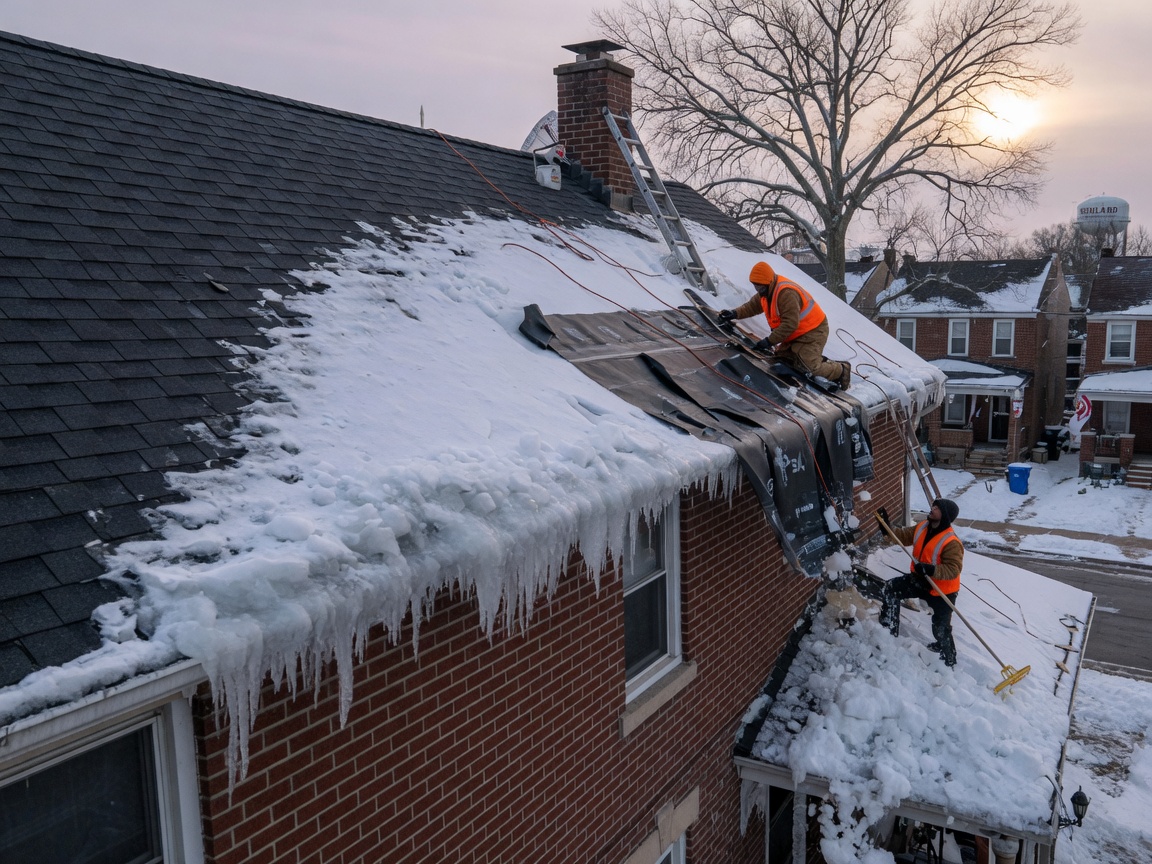
Ice dams form when attic heat melts snow on the upper roof, allowing water to refreeze at the eaves and push under shingles. In St. Louis's humid continental climate with cold winters, homeowners in areas such as Soulard and Lafayette Square see this most often on 80- to 120-year-old brick houses where heat leaks through uninsulated attics. Keeping the roof deck cold by sealing attic bypasses and adding ridge vents cuts the temperature difference that starts the cycle.
How Ice Dams Develop in St. Louis Winters
St. Louis sits in an independent city with winters that swing between 15°F nights and 35°F days, creating repeated melt-and-freeze events. Snow from nor'easters piles on roofs in Tower Grove South and Benton Park while warm air from living spaces rises through recessed lights and plumbing chases. Once meltwater reaches the overhang it refreezes, forming a dam that forces water under asphalt shingles. Older homes near the Missouri Botanical Garden often lack modern baffles, so heat builds quickly even after modest snowfalls. Checking for these leaks early prevents ceiling stains that appear weeks later when temperatures rise.
Attic Ventilation and Insulation Upgrades
Balanced intake and exhaust vents keep the underside of the roof within a few degrees of outside air. In Central West End row houses, adding soffit vents along the eaves and a continuous ridge vent at the peak moves moist air out before it condenses. Blown-in cellulose at R-49 depth over existing fiberglass stops heat from reaching the deck without compressing existing material. Homeowners in University City and Webster Groves who combine this with sealing can lights and bath fans see fewer ice dams the following season. These steps also reduce summer cooling loads when hot, humid air returns.
Gutter and Roof Edge Care
Clean gutters before the first freeze so meltwater has a clear path off the roof. In Shaw and Forest Park Southeast, leaves from mature trees clog downspouts and let water sit against the drip edge, worsening dam formation. Installing 6-inch gutters with 3-inch outlets handles heavier runoff from severe storms common in the region. Metal roof edge flashing that extends 6 inches up the slope under the shingles creates a second barrier if a small dam still forms. Checking these details each fall keeps water from entering walls in Midtown and Downtown buildings with flat parapets nearby.
When Professional Roof Work Becomes Necessary
Persistent dams after ventilation upgrades point to underlying issues such as missing underlayment or damaged flashing around chimneys. Roof repair in St. Louis crews can replace sections of underlayment with ice-and-water shield that extends 6 feet up the slope on homes in The Hill. If multiple winters have caused shingle loss, roof replacement in St. Louis teams often install new synthetic underlayment rated for 90 days of exposure. After spring storms, review what affects the price of asphalt shingle repairs in St. Louis to understand how ice-dam damage factors into material and labor costs for properties near Delmar Loop.